
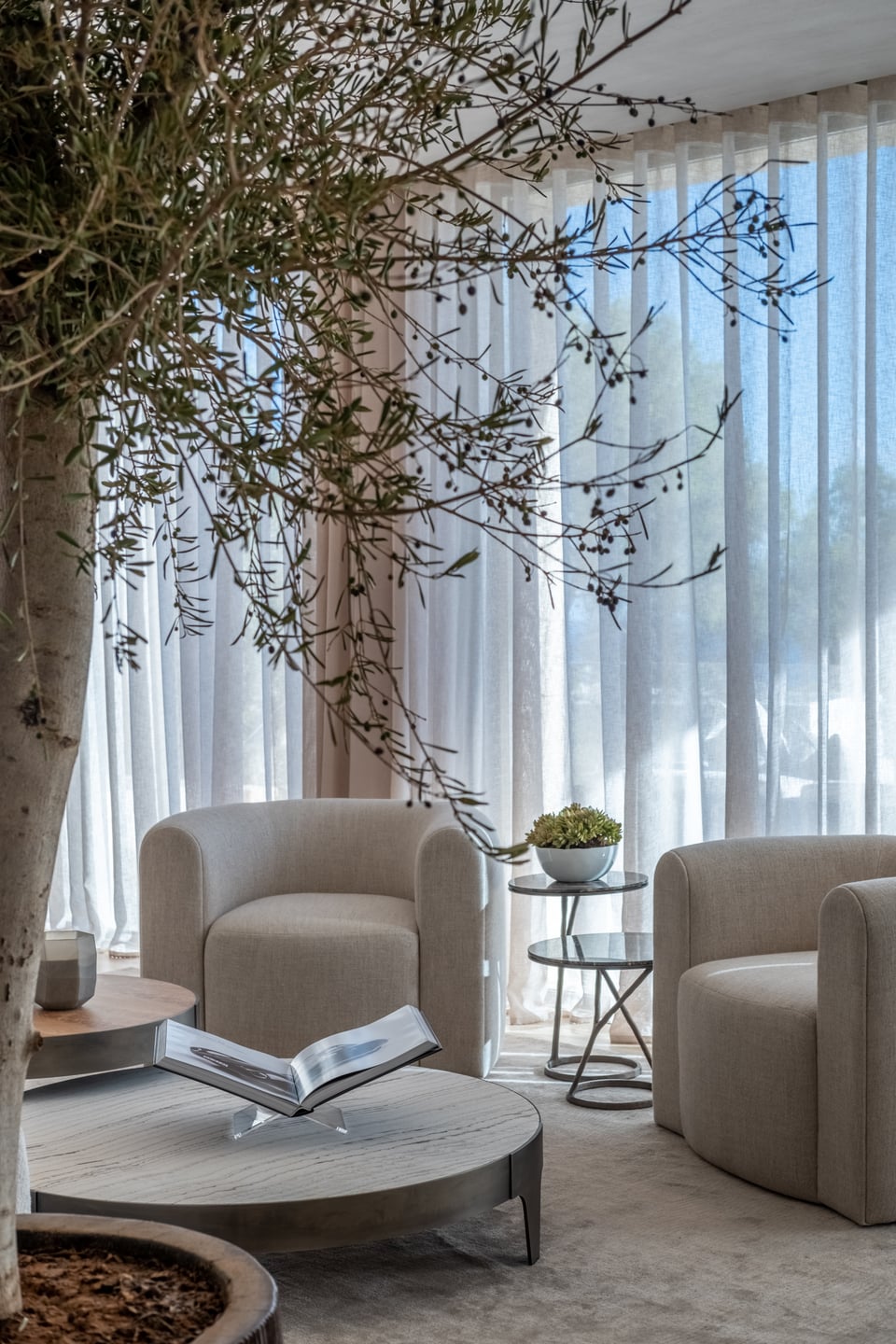
Procurement protects the original idea
A furniture schedule is not simply a list of products. Scale, finish, lead time, access and the relationship between pieces all affect whether the concept survives delivery.
Tracking approvals and orders with care gives the project team time to solve problems before they reach site. It also gives the client a clear view of what has been committed and what remains to be decided.
Custom does not always mean complicated
A room may need a table with an exact length, a rug that holds a seating group or a cabinet shaped around an existing wall. A specific response can be more useful than searching indefinitely for something almost right.
The maker becomes part of the design process. Samples and prototypes turn an idea into an object that feels inevitable in its setting.
Styling decides what to leave out
The final layer brings art, books, objects and daily essentials into balance. It should never disguise the architecture or make a new home feel over-arranged.
A little space around a meaningful piece gives it more presence. The interior feels complete because every object has a reason to be there.