
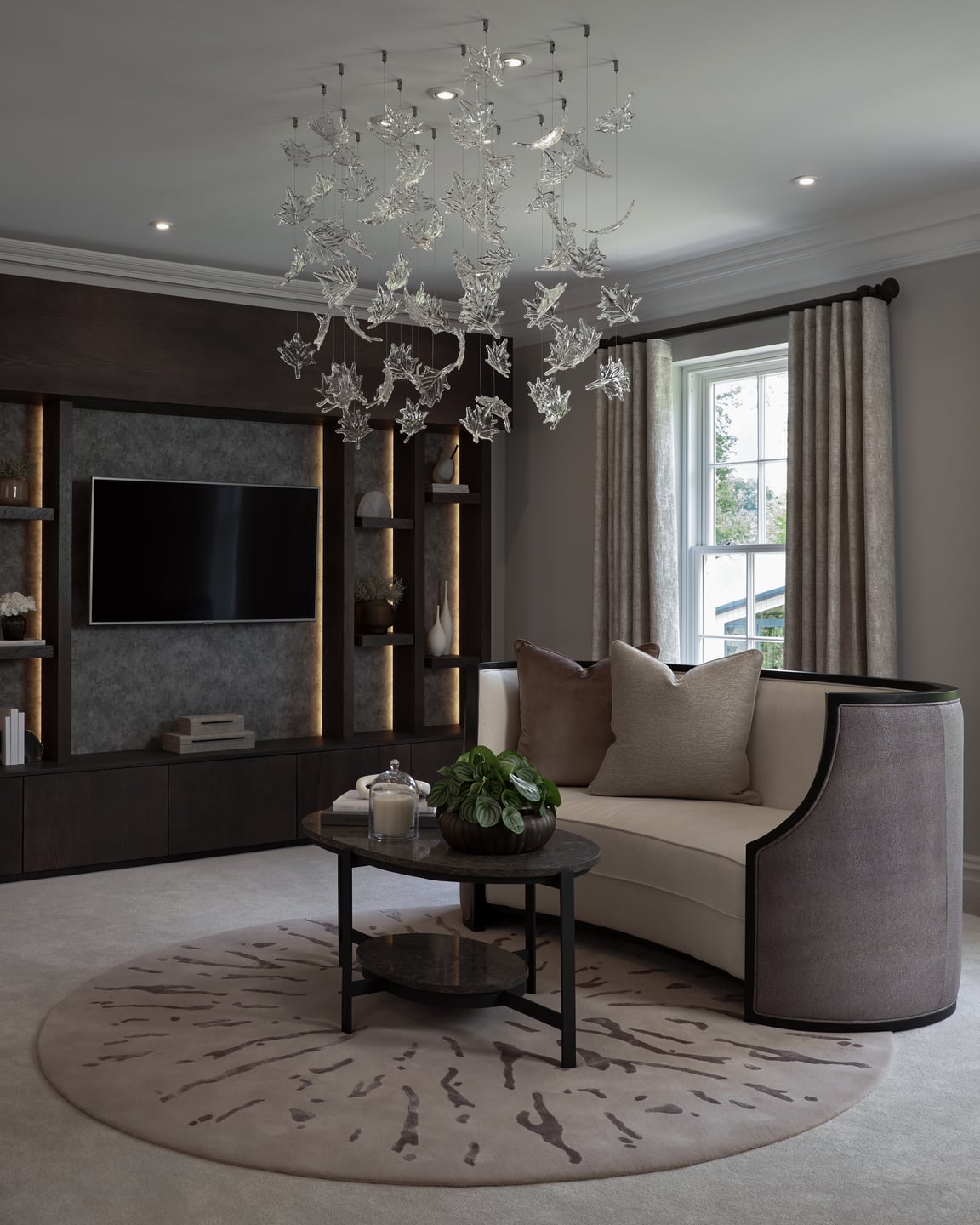
Plan light with the furniture
A ceiling plan alone cannot describe how a room will be lit. Reading, dining, artwork and conversation each ask for light in a different place. The furniture plan gives those needs a physical context.
When lighting and interiors develop together, switches fall naturally to hand, decorative fittings hold the right scale and architectural light supports rather than flattens the room.
Let materials respond
Polished stone catches a narrow beam. Linen softens it. Dark timber may need warmth to reveal its grain without becoming orange. Samples should be studied under the colour temperature and direction they will meet in the finished space.
This is especially important in yacht interiors and windowless hospitality areas, where artificial light carries more of the atmosphere.
Complexity should feel simple
A layered scheme may contain many circuits, but daily use should remain intuitive. A small number of well-judged scenes can move a room from morning clarity to evening intimacy.
The technical work disappears into that ease. What remains is a room that always seems to have the right light for the moment.