
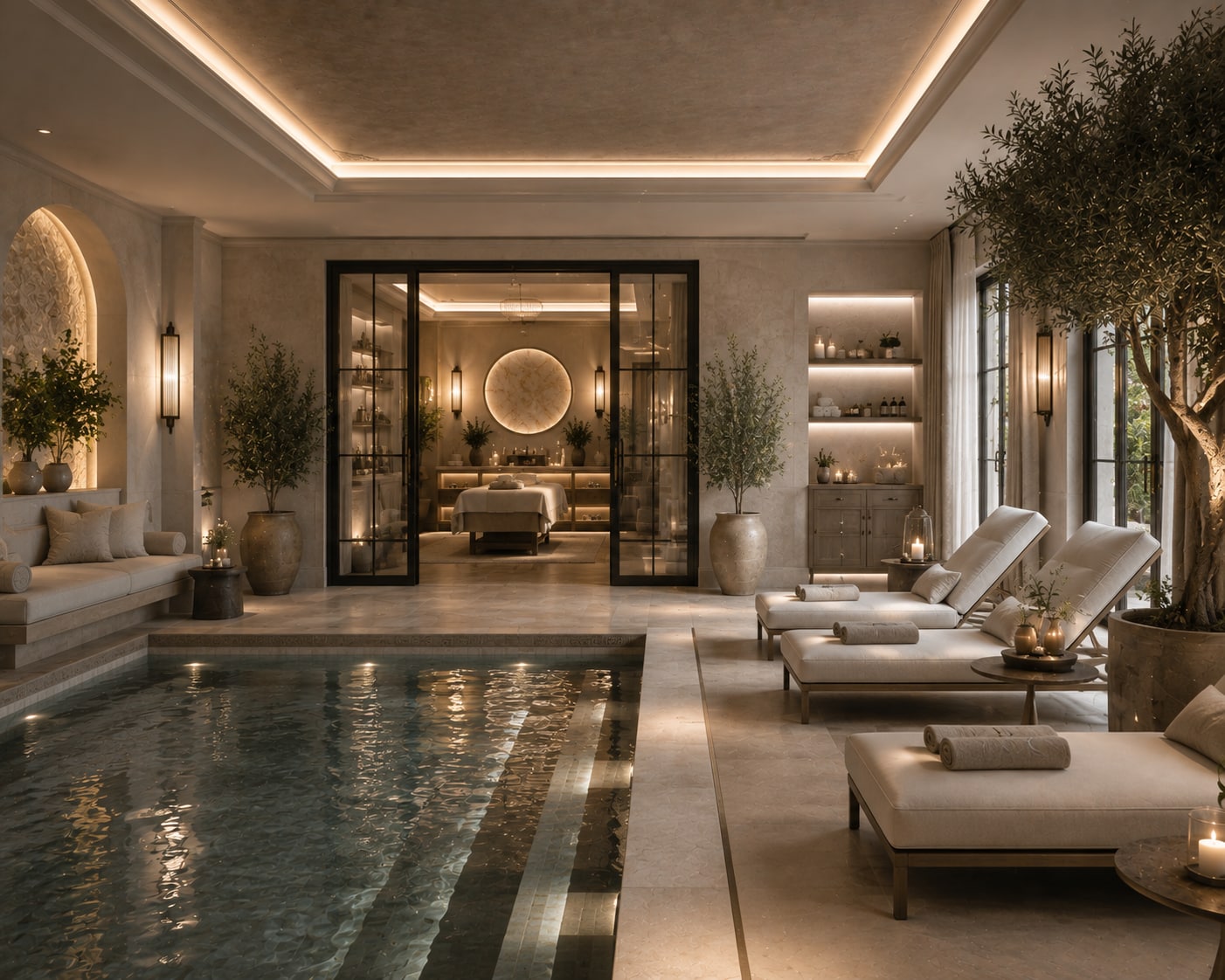
The transition is part of the treatment
A guest may arrive from a busy hotel lobby, a city street or the social spaces of a yacht. Reception, changing and circulation should gradually ease the pace. Direct views are controlled. Sound becomes softer. Light sits lower in the field of vision.
When the sequence works, a guest feels oriented without being hurried or confronted by directives.
Quiet spaces still need operational clarity
Staff routes, linen storage, treatment turnaround and cleaning requirements shape the plan. Resolving them early protects the calm of guest areas and helps the space perform throughout the day.
Durable materials need not feel clinical. Texture, jointing and controlled contrast can give robust finishes a more tactile quality.
Use less, with greater care
Wellness interiors benefit from restraint, but not anonymity. One local material, a carefully framed view or the sound of water can give the experience a sense of place.
The goal is not to remove character. It is to create enough visual and acoustic quiet for character to be noticed.